
 As we look ahead to 2026, the property and development market is beginning to move beyond a prolonged period of uncertainty. Sentiment, particularly on the development side and most notably in London, is already improving. Lower interest rates, a more settled macroeconomic backdrop and a broadly steady fiscal position following the Budget are helping restore confidence, even in the absence of major new policy interventions.
Based on the level and nature of enquiries we are seeing, there is a genuine desire across the market to do something – to find solutions, progress schemes and reposition assets. While constraints remain, the direction of travel is clearly more positive, with the market starting to find its feet again.
Rather than a single catalyst, 2026 is shaping up as a year where improving fundamentals, pragmatic decision-making and renewed demand begin to translate into increased development activity.
 For occupiers, 2026 will continue to be shaped by flight-to-quality alongside disciplined cost control. Prime office assets remain resilient, supported by steady leasing activity and sustained demand for well-located, high-quality space that supports collaboration, wellbeing and ESG performance.
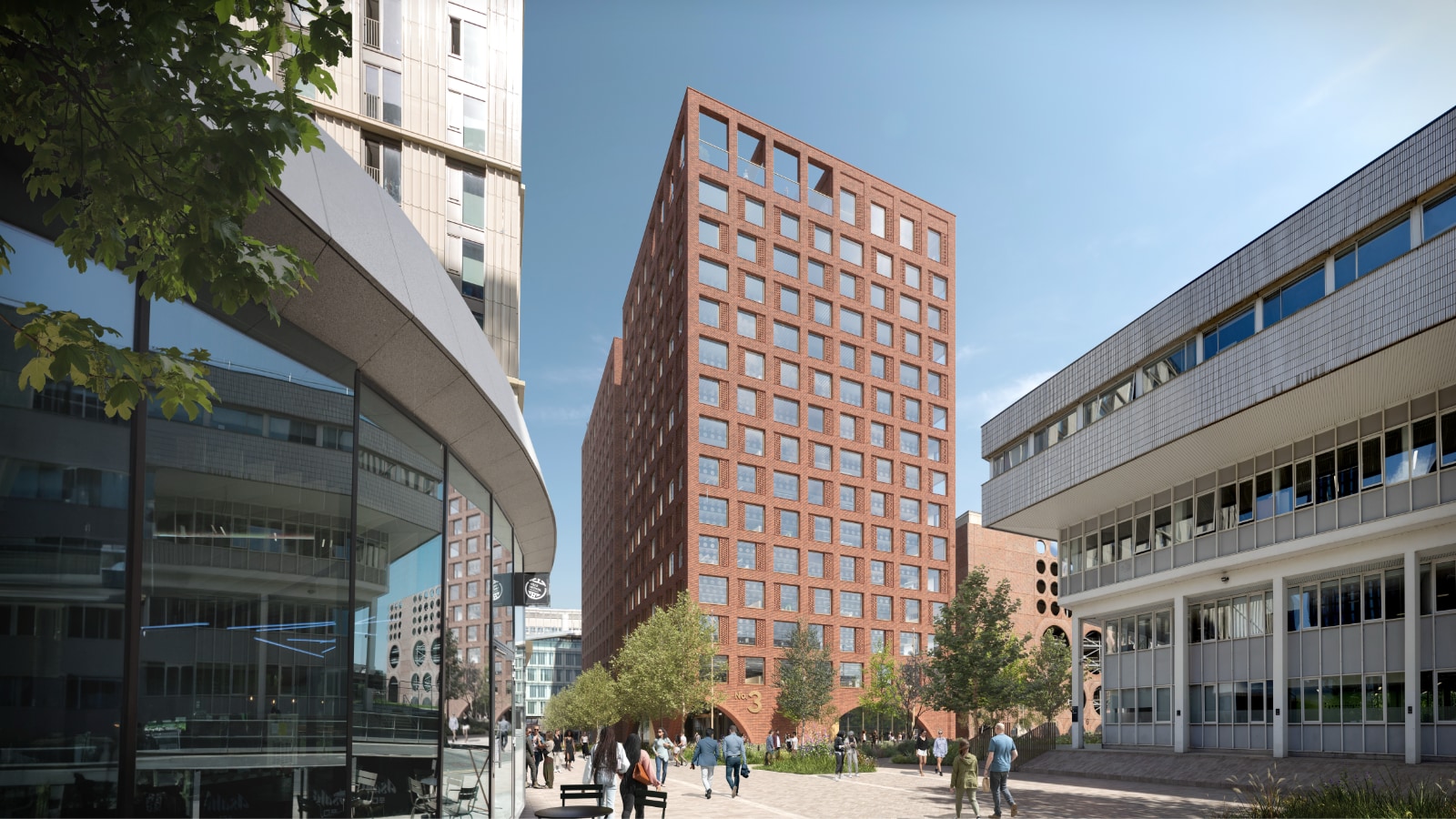
By contrast, secondary and ageing stock continues to face rising vacancy as hybrid working patterns stabilise. Office attendance has now largely settled at around 55–60%, providing a more reliable foundation for occupier decision-making. While overall occupancy remained above 40% for much of 2025, several regional cities are now recording strong mid-week performance that exceeds pre-pandemic levels.
Importantly, occupiers are not retreating from the market. Instead, they are becoming more selective. Rental re-pricing is improving affordability, regional centres are strengthening their competitive position, and demand for flexible and managed workspace continues to grow. These dynamics point to a more segmented but active office market in 2026, where quality, flexibility and value alignment drive outcomes.
 The UK commercial property investment market enters 2026 with improving momentum. Falling inflation and lower funding costs, alongside further anticipated reductions in the Bank of England base rate, are already feeding through into sentiment and transactional confidence.
This is supporting increased activity and greater pricing clarity, particularly where assets are underpinned by strong fundamentals. Prime assets in supply-constrained locations remain scarce and highly sought after, with pricing expected to firm as the relative value of real estate improves against bonds.
Secondary and tertiary assets remain more challenging, particularly those requiring significant capital expenditure or carrying elevated vacancy risk. Investors are, however, actively engaging with repositioning opportunities where pricing and delivery risk are appropriately aligned. Overall, selectivity remains high, but appetite is returning.

 Foodstores retain their mission-critical status going into 2026, underpinned by non-discretionary consumer demand. Operators continue to face operational pressures, including higher wages, National Insurance and business rates, within a competitive trading environment.
Despite this, investor appetite remains strong. Robust investment volumes towards the end of 2025 underline continued confidence in the sector, driven by defensive income characteristics and long-term relevance. Demand is expected to remain focused on well-located, strategically important stores with strong trading fundamentals.
 Housing delivery remains the key challenge, but sentiment is shifting. In London, the proposed Homes for London emergency package reflects a clear acknowledgement of delivery constraints. Measures such as reduced affordable housing fast-track thresholds, temporary CIL relief and increased design flexibility are constructive steps that should help bring forward marginal schemes.
While not a silver bullet – the measures concentrate on the supply side of the equation, anticipating the banks will encourage demand- these changes are expected to unlock a growing number of stalled sites, particularly as finance costs ease and confidence improves. Crucially, demand is returning first, and development activity will follow in time.
Across the living sector, co-living is currently the strongest driver of delivery momentum, particularly where schemes align with local authority objectives. Purpose-built student accommodation also remains active, especially where need remains strong, schemes arewell-integrated into existing communities and with strong place-making objectives.
 Build to Rent and mixed-tenure models continue to play an important role, but flexibility around tenure mix is increasingly essential as developers and lenders respond to affordability pressures and evolving public sector priorities.
 The market is adjusting to more realistic expectations around pricing, absorption and risk. At the same time, lenders are refining their requirements, with greater emphasis on robust structures, phasing and delivery certainty rather than blanket retrenchment.
This recalibration is helping viable schemes progress. As banks and funders become more comfortable with revised assumptions, demand is beginning to translate into action, laying the groundwork for increased development starts.
 The residential sales market remains nuanced, but there are signs of stabilisation. In London, developers continue to focus on lower-risk locations and phases, while the alternative living models outlined earlier remain an important part of the delivery mix.
Registered Providers are selectively re-entering the market as grant certainty has improved. At the same time, RPs have adopted a more targeted development strategy, focusing on specific locations and types of schemes that align closely with their core business plans. Local authorities are increasingly active, particularly in response to temporary accommodation pressures. While questions around saturation in some sub-sectors remain, demand fundamentals continue to support well-located, well-designed schemes.
 Policy reform remains central to unlocking long-term growth. Updates to local plan regulations and the NPPF reinforce a national commitment to accelerating housing and infrastructure delivery.
The forthcoming London Plan consultation is expected to revisit housing targets and the role of under-utilised grey belt land, particularly where brownfield capacity has been exhausted. The opportunity is significant, but delivery will depend on adequately resourced local authorities, clearer viability processes and more consistent decision-making.
 Public estate transformation is emerging as an increasingly important source of development activity. Health, education and local authority estates offer opportunities for regeneration-led growth, supported by public-private partnerships that align social value, delivery certainty and long-term stewardship.
These projects are likely to form a more resilient pipeline through 2026 and beyond, particularly where housing, infrastructure and community uses are integrated.
 Overall, 2026 feels less constrained than recent years. While challenges around viability, regulation and capacity remain, sentiment is improving and demand is slowly returning. The market is finding its feet, with a growing willingness to engage, adapt and progress.
The opportunity now lies in converting this improving confidence into delivery. Where policy ambition, funding structures and pragmatic solutions align, development activity is increasingly likely to follow.
Newsteer’s #OurSteer 2026 authors:
Alastair Crowdy, Managing Director
David Conboy, Director, Development Consultancy
Jessica Wilson, Director, Planning